
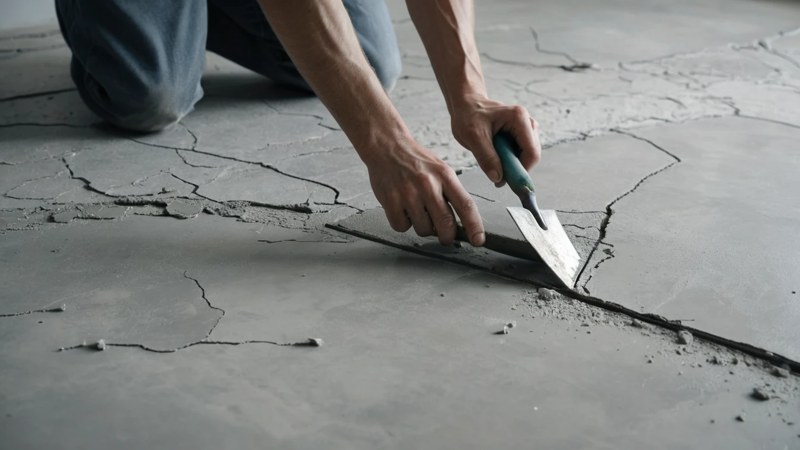
Patching concrete floor made simple. Learn easy steps, tools, and pro tips to fix cracks and holes quickly and effectively.
Patching concrete floor involves cleaning damaged areas, filling cracks or holes with a suitable patching compound, and smoothing it for a durable finish. Done right, it restores strength, improves appearance, and prevents further damage. It’s a simple DIY task with the right tools and steps.
Patching Concrete Floor: The Complete DIY Guide 🛠️
Why Does Your Concrete Floor Keep Cracking? 🤔
Ever wondered why your concrete floor cracks even when it looks strong? Concrete may seem solid, but it naturally expands and shrinks with temperature changes. Over time, this movement creates stress, leading to cracks and surface damage.
Another reason is moisture. Water seeps into small gaps and weakens the structure. When it dries or freezes, it causes expansion. This cycle slowly breaks down the surface. Poor installation or heavy loads can also speed up damage.
The good news? You can fix most of these issues yourself. Patching concrete floor damage early prevents bigger problems later. Ignoring it only makes repairs more expensive and difficult.
What Is Patching Concrete Floor? 🧱
Patching concrete floor means repairing damaged areas like cracks, holes, or uneven surfaces. It uses special compounds designed to bond with existing concrete. These materials restore strength and improve appearance.
Unlike full replacement, patching is quick and cost-effective. It targets only damaged spots. This saves time, effort, and money. It’s ideal for garages, basements, patios, and indoor floors.
Think of it like filling a cavity in a tooth. You don’t replace the whole tooth—you fix the damaged part. That’s exactly what patching does for concrete.
Signs Your Concrete Floor Needs Repair 🚨
Not sure if your floor needs patching? Look for these common signs:
- Cracks spreading across the surface
- Small holes or chipped areas
- Uneven or rough patches
- Dusty or powdery surface
- Water pooling in certain spots
If you notice any of these, act quickly. Small damage turns into big repairs if ignored. Early patching keeps your floor safe and long-lasting.
Tools And Materials You Will Need 🧰
Before starting, gather everything you need. This makes the job faster and easier.
- Concrete patching compound
- Trowel or putty knife
- Wire brush
- Vacuum or broom
- Bucket and mixing tool
- Safety gloves and goggles
Here’s a quick overview:
| Tool/Material | Purpose |
| Wire Brush | Removes loose debris |
| Concrete Patch Mix | Fills cracks and holes |
| Trowel | Smooths the surface |
| Vacuum | Cleans dust and dirt |
| Water Bucket | Helps with mixing |
Having the right tools ensures better results and less frustration.
Types Of Concrete Damage You Can Patch 🔍
Not all damage is the same. Understanding the type helps you choose the right method.
Small Cracks
These are thin and shallow. They are easy to fix with liquid fillers or sealants.
Large Cracks
Wider cracks need thicker patching compounds. Sometimes they require layering.
Holes And Pits
These form due to wear or impact. They need strong patch material to fill properly.
Surface Scaling
This happens when the top layer flakes off. It needs resurfacing instead of simple patching.
Knowing the damage type helps you avoid mistakes and get better results.
Step-By-Step Guide To Patching Concrete Floor 🪜
Ready to fix your floor? Follow these simple steps:
1. Clean The Area
Remove dirt, dust, and loose debris. Use a wire brush and vacuum. A clean surface ensures strong bonding.
2. Prepare The Crack Or Hole
Widen small cracks slightly. This helps the patching material stick better.
3. Mix The Patching Compound
Follow the instructions on the product. Mix until smooth and lump-free.
4. Apply The Patch
Fill the damaged area using a trowel. Press firmly to remove air pockets.
5. Smooth The Surface
Level the patch with the surrounding floor. This creates a seamless finish.
6. Let It Cure
Allow proper drying time. Avoid walking on it until fully set.
Choosing The Right Patching Material 🧪
Not all patching compounds are equal. Choose based on your needs.
| Type | Best For | Drying Time |
| Quick-Set Compound | Fast repairs | 1–2 hours |
| Epoxy Patch | Heavy-duty areas | 24 hours |
| Latex-Based Patch | Small cracks and smooth finish | 4–6 hours |
| Cement-Based Patch | General repairs | 12–24 hours |
Pick the right one to ensure durability and strength.
Common Mistakes To Avoid ❌
Even simple repairs can go wrong. Avoid these mistakes:
- Skipping cleaning before patching
- Using the wrong material
- Applying too much or too little compound
- Not allowing enough drying time
- Ignoring deeper structural issues
Avoiding these mistakes saves time and money. It also ensures your repair lasts longer.
How Long Does Concrete Patch Last? ⏳
A properly patched concrete floor can last years. The lifespan depends on:
- Quality of materials
- Surface preparation
- Environmental conditions
- Traffic and usage
On average, a good patch lasts 5–10 years. With proper maintenance, it can last even longer.
Can You Patch Concrete Yourself? 💡
Yes, you absolutely can! Patching concrete floor damage is beginner-friendly. You don’t need professional skills for small repairs.
However, large cracks or structural damage may need expert help. If the floor keeps cracking, there could be deeper issues.
Start small. Learn the process. Build confidence. Soon, you’ll handle repairs like a pro.
Cost Of Patching Concrete Floor 💰
Patching is much cheaper than replacing concrete.
| Repair Type | Average Cost (DIY) |
| Small Cracks | Low |
| Medium Holes | Moderate |
| Large Repairs | Higher |
DIY saves labor costs. Most materials are affordable and widely available.
How To Maintain Your Concrete Floor 🧼
After patching, maintenance is key.
- Clean regularly to prevent dirt buildup
- Seal the surface to protect from moisture
- Avoid heavy impacts
- Fix small cracks early
Maintenance extends the life of your repairs. It keeps your floor looking new and strong.
Indoor Vs Outdoor Concrete Patching 🌦️
Indoor floors are easier to repair. They face less weather stress. Outdoor surfaces deal with rain, heat, and temperature changes.
Outdoor patching requires weather-resistant materials. Timing also matters. Avoid patching during extreme heat or rain.
Choose materials based on location for best results.
When Should You Call A Professional? 👷
Sometimes DIY isn’t enough.
Call a professional if:
- Cracks are very wide or deep
- The floor is sinking or uneven
- Repairs keep failing
- Structural damage is visible
Experts can diagnose hidden issues and provide long-term solutions.
Benefits Of Patching Instead Of Replacing 🌟
Why patch instead of replacing the whole floor?
- Saves money
- Faster process
- Less labor
- Minimal disruption
- Eco-friendly option
Patching is the smart choice for most minor to moderate damage.
Pro Tips For A Smooth Finish ✨
Want your patch to look perfect? Follow these tips:
- Work in small sections
- Use a damp sponge for smoothing
- Match the texture with surrounding concrete
- Don’t rush the drying process
“A smooth patch blends in so well, no one will notice it was ever damaged.”
Conclusion 🧾
Patching concrete floor damage is simple, affordable, and effective. With the right tools and steps, you can fix cracks and holes easily. Acting early prevents bigger problems and saves money. Whether it’s a small crack or a larger hole, proper patching keeps your floor strong and long-lasting.
FAQs ❓
How do I patch concrete floor cracks at home?
Clean the crack and remove debris first. Apply a suitable patching compound and smooth it. Let it dry completely before use.
What is the best material for patching concrete floors?
Epoxy works best for heavy-duty repairs. Latex-based compounds are good for small cracks. Choose based on damage type.
How long does patched concrete take to dry?
Most patches dry within 4 to 24 hours. Quick-set compounds dry faster. Always follow product instructions.
Can I patch large holes in concrete floor myself?
Yes, but it needs proper preparation and layering. Use strong patching material. For very large damage, consider professional help.
Why does my concrete patch keep cracking again?
Poor surface prep or wrong material causes failure. Movement and moisture also affect durability. Ensure proper technique and sealing.